Information and training
Provide current operating, maintenance and safety information for Robotic Vial Handling, plus settings, software backups, training and any outstanding actions.
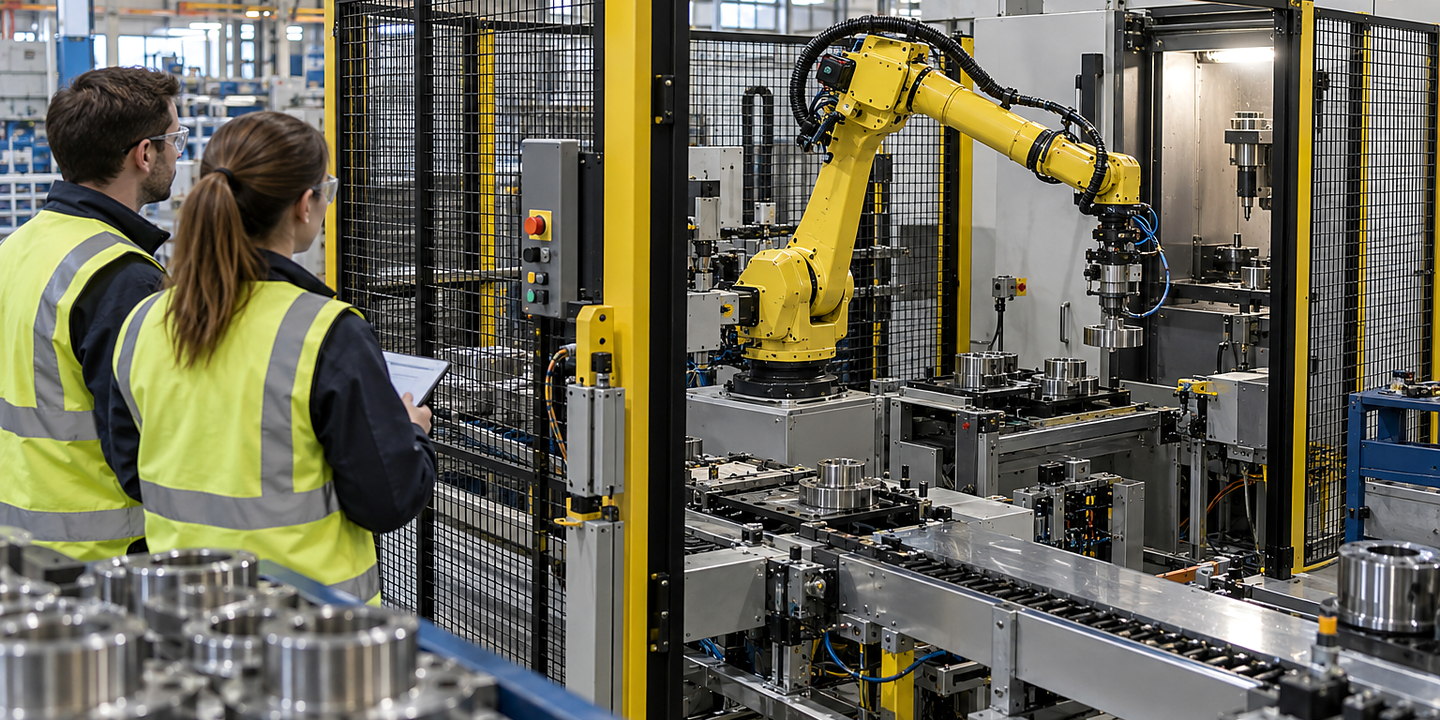
Plan documentation, training, spares, maintenance and change control for robotic vial handling.
Reliable support for robotic vial handling starts with safe access, clear diagnostics, controlled settings, maintainable parts and information your team can use.
Your support plan should match the people responsible for repeatable production using robotic vial handling and loading, the production risk and the response your site needs.
Plan robotic vial handling around your parts, process, cycle time, tooling, recovery and acceptance criteria. Discuss the highest-risk feasibility questions with Oxford Industrial Automation. Plan the information, access and response needed to keep your operation running safely and consistently.
Discuss your application

Provide current operating, maintenance and safety information for Robotic Vial Handling, plus settings, software backups, training and any outstanding actions.
Set inspection, cleaning, calibration where applicable and wear-part tasks around operator access, recovery and changeover.
Give the people responsible for repeatable production using robotic vial handling and loading clear fault information, safe diagnostic access, escalation routes and a controlled restart.
Review new products, parts, software, materials or rates before altering settings that affect run-off criteria and production evidence.
Record the current operating state, active recipe, recent material or variant change and the condition of part, product and process variation for robotic vial handling & loading.
Use the approved isolation or intervention method for repeatable production using robotic vial handling and loading; never defeat a safeguard or force an output to shorten diagnosis.
Use the documented recovery sequence for Robotic Vial Handling, confirm the first accepted output and retain the fault and action record for trend review.
A new variant or higher rate can alter part, product and process variation for robotic vial handling & loading, arrival pattern and presentation, required cycle and production pattern, tooling, sensing and process interfaces, operator access, recovery and changeover, and run-off criteria and production evidence. Record the change, assess consequences and repeat the relevant trial or validation rather than assuming the previous result transfers.